Are you currently experiencing homelessness or housing instability? Help may be available. You do not need to have income or meet other requirements in order to receive help.
Jump to a section:
Coordinated Entry
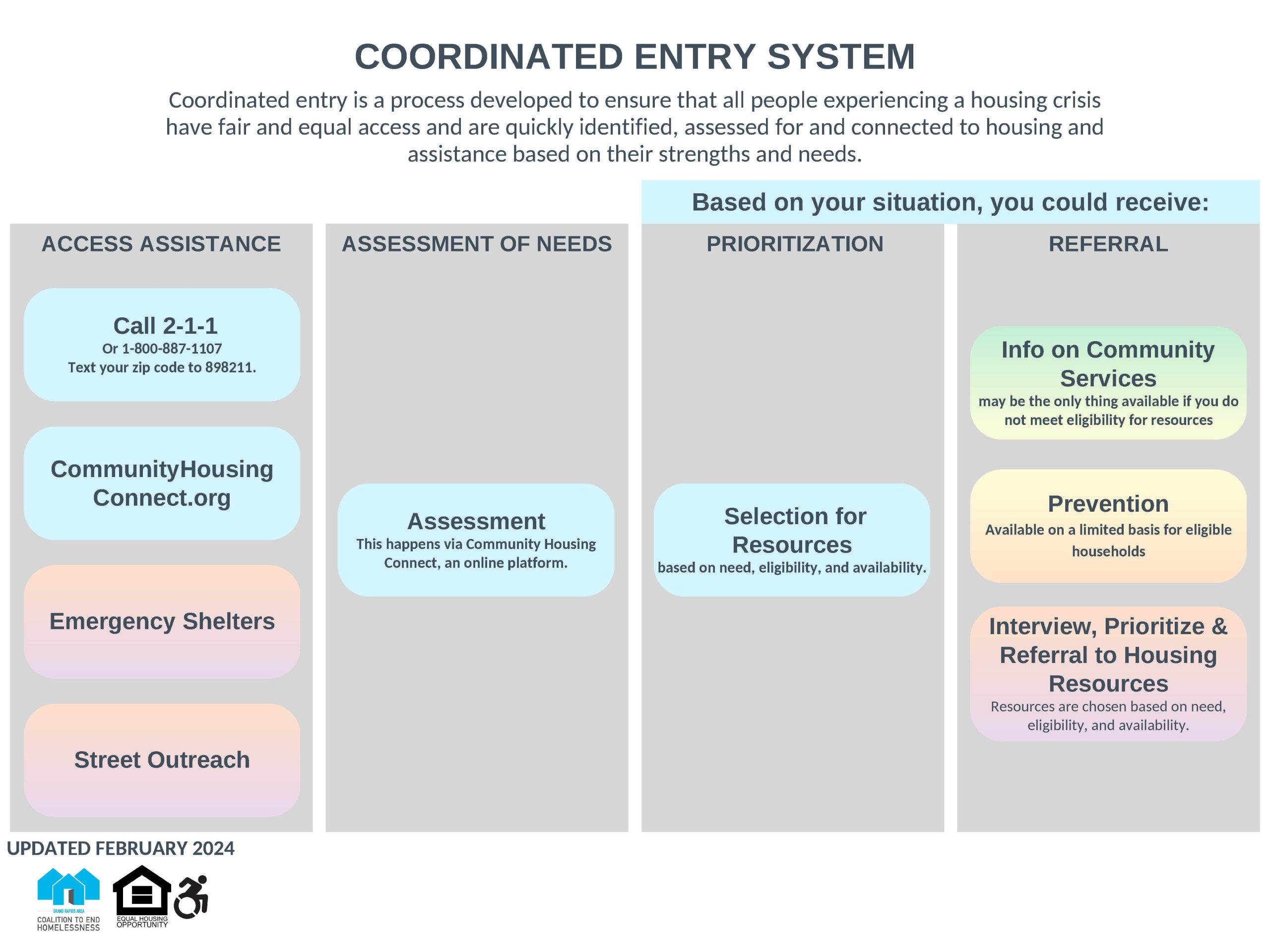
Get started by completing an assessment. Due to limited resources, Coordinated Entry (CE) focuses on helping households prioritized using consistent criteria about safety, health, and housing access. Please note that completing this form is only the first step in being considered for help through CE; housing may not be immediately available and is not guaranteed.
This tool is available for those experiencing a housing crisis – those who may be residing outdoors, in their car, at a park, or staying in an emergency shelter or hotel paid for by a community agency. Those at risk of losing their housing are also experiencing a housing crisis. This brief online questionnaire will collect some information about your situation. This will be used to determine which housing resources you may receive. Shelter and Outreach Staff can also help you complete an assessment.
Michigan 211
Michigan 2-1-1 is an easy way to connect with help of all kinds, right in your community. Just call, text, or search online and we’ll get you connected.
- Call: Dial 2-1-1 or 1-800-887-1107
- Text: Send your zip code to “898211”
- Online: www.mi211.org (Live chat available)
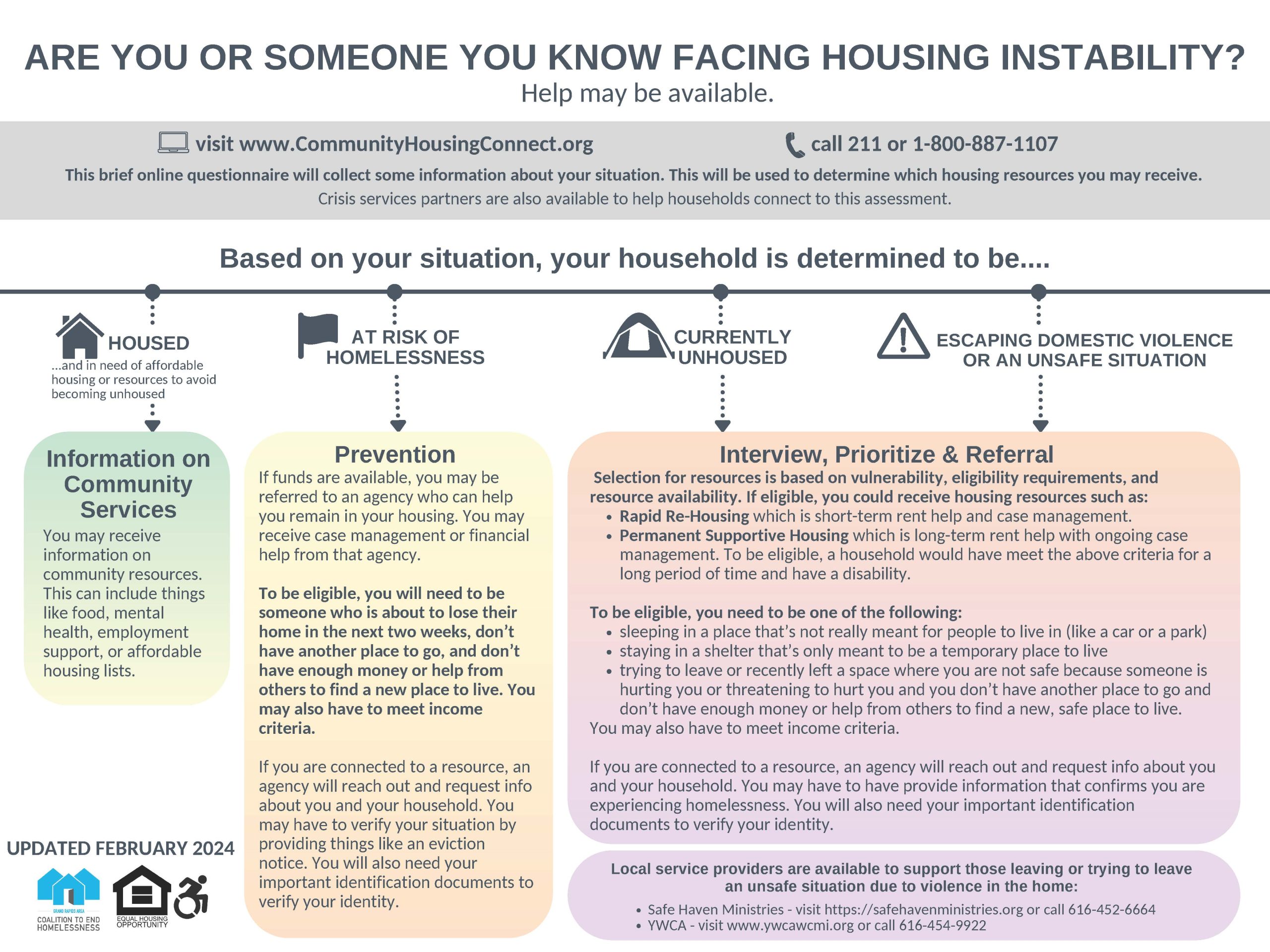
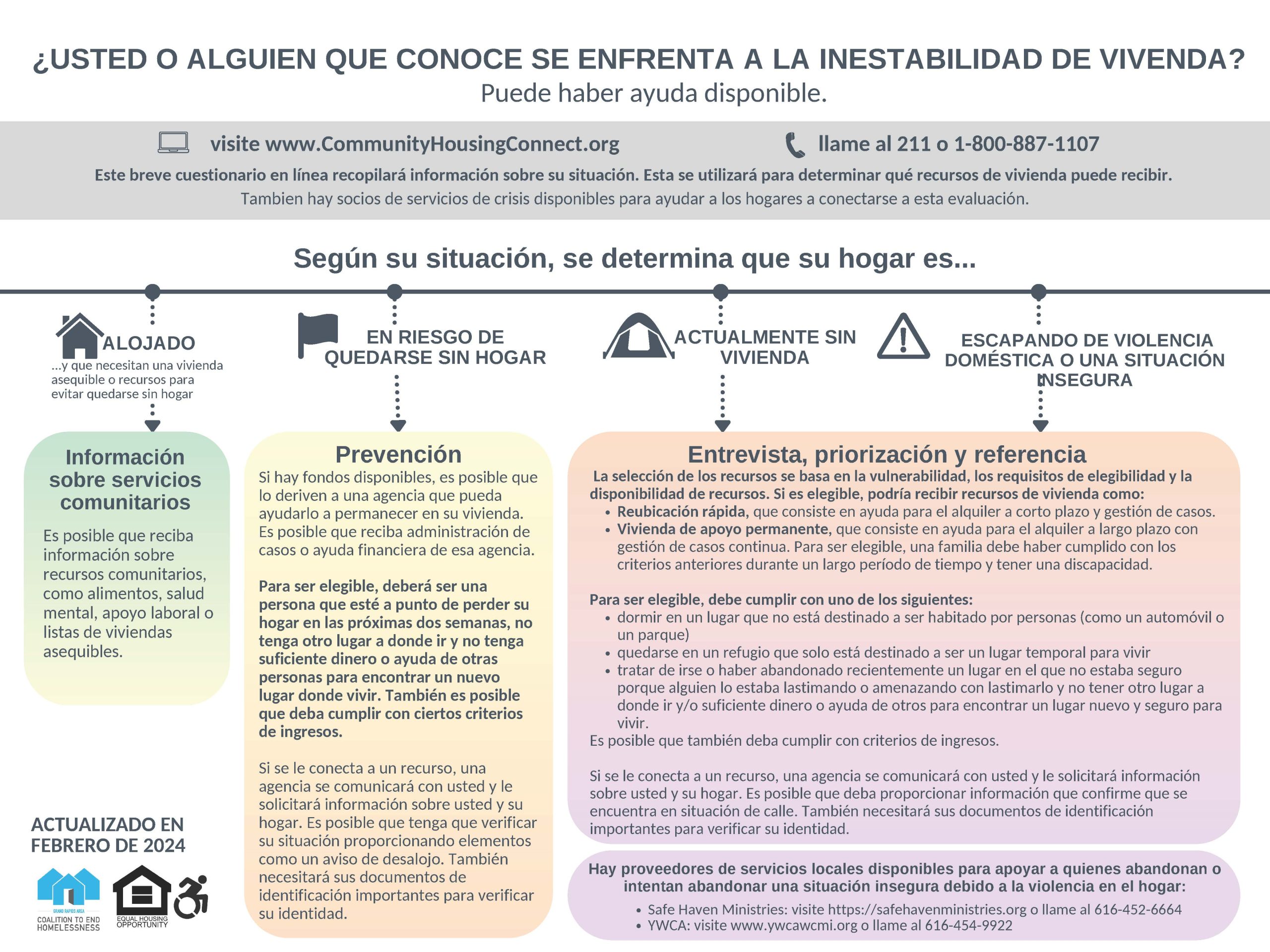
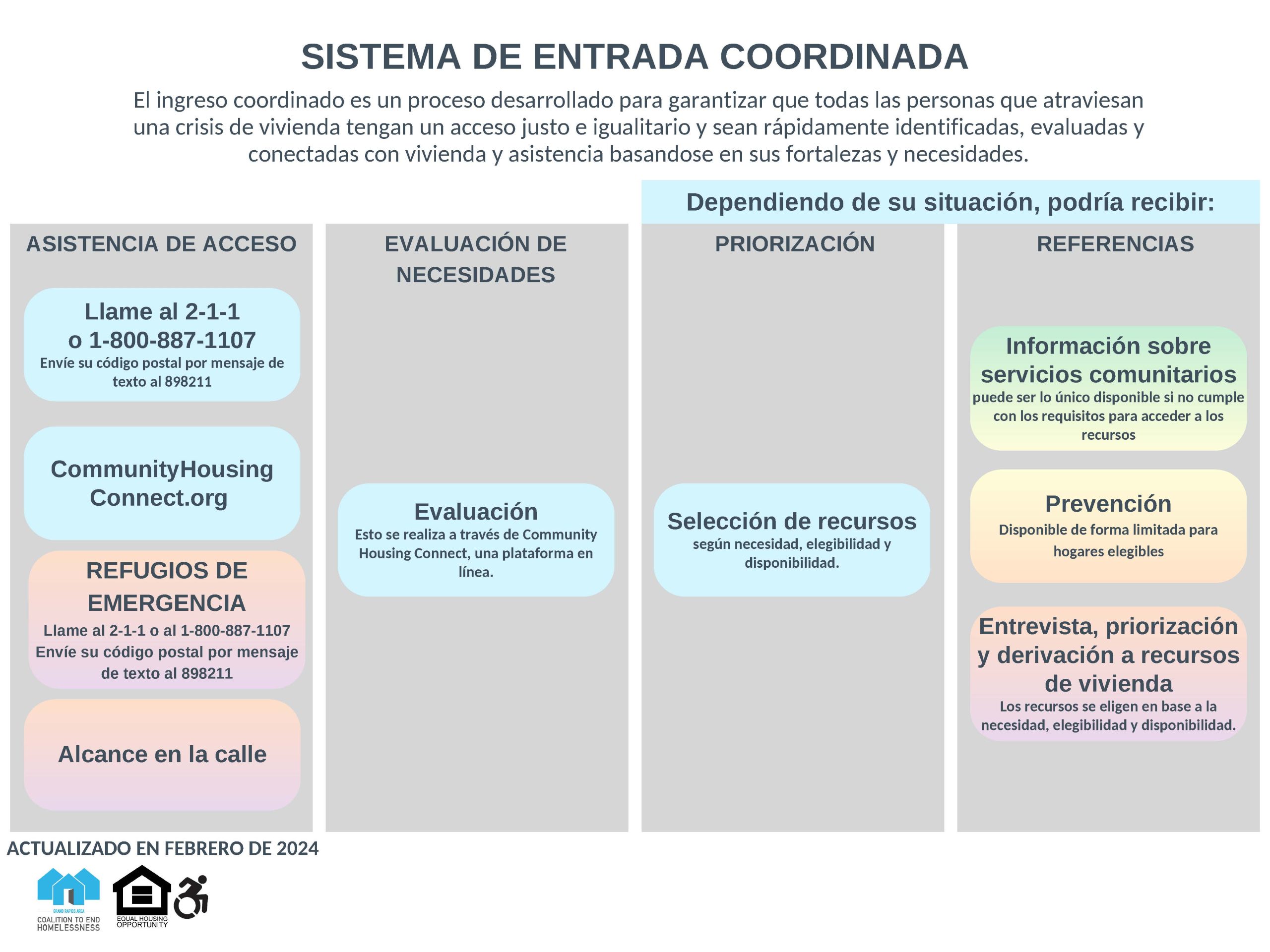
Coordinated Entry flyers available in English and Spanish:
Types of Resources Available through Coordinated Entry
To be eligible for resources through Coordinated Entry (CE), you need to be one of the following:
- sleeping in a place that’s not really meant for people to live in (like a car or a park)
- staying in a shelter that’s only meant to be a temporary place to live
- trying to leave or recently left a space where you are not safe because someone is hurting you or threatening to hurt you and you don’t have another place to go and don’t have enough money or help from others to find a new, safe place to live.
You may also have to meet income criteria.
PERMANENT SUPPORTIVE HOUSING (PSH): Provides long-term housing assistance and supportive services to chronically homeless individuals and families. Chronic homelessness is defined as a single continuous episode or multiple episodes of homelessness lasting 12 months or longer, with a qualified and documented disability. Key components of the program is a commitment to providing the necessary long-term support through a range of individualized services, including:
- Long-term financial assistance for expenses such as security deposit, rent, and utilities
- Assistance with finding and securing appropriate housing
- Housing case management to ensure participants are receiving the support they need
- Help with obtaining public benefits
- Connections to community resources and services such as employment, education, and healthcare
Permanent Supportive Housing Resources
TRANSITIONAL HOUSING (TH): Provides temporary housing and supportive services to individuals and families experiencing homelessness with the goal of stability and support to successfully move to and maintain permanent housing. Programs provide a range of services to help households achieve housing stability, including:
- Medium-term housing placement
- Assistance with finding and securing appropriate housing
- Housing case management to ensure participants are receiving the support they need
- Help with obtaining public benefits
- Connections to community resources and services such as employment, education, and healthcare
Transitional Housing Resources
RAPID RE-HOUSING (RRH): Provides temporary assistance dedicated to helping individuals and families experiencing homelessness obtain and maintain stable housing. Programs provide a range of services to help households achieve housing stability, including:
- Temporary financial assistance for expenses such as security deposit, rent, and utility deposits/assistance
- Assistance with finding and securing appropriate housing
- Housing case management to ensure participants are receiving the support they need
- Help with obtaining public benefits
- Connections to community resources and services such as employment, education, and healthcare
HOMELESSNESS PREVENTION (HP): Provides temporary assistance dedicated to helping very low-income individuals and families who are facing eviction and at risk of homelessness. Programs provide a wide range of services to help households achieve housing stability, including:
- Temporary financial assistance for expenses such as rental arrears, rent, security deposit, utility arrears/deposits/assistance
- Eviction prevention services to help people stay in their current homes
- Assistance with finding and securing new housing
- Housing case management to ensure participants are receiving the support they need
- Help with obtaining public benefits
- Connections to community resources and services such as employment, education, and healthcare
- To be eligible for this specific resource, you will need to be someone who is about to lose their home in the next two weeks, do not have another place to go, and do not have enough money or help from others to find a new place to live. You may also have to meet income criteria.
Homelessness Prevention Resources
Supportive Service Only (SSO): These programs do not provide housing directly but offer important services that support individuals and families experiencing homelessness or at risk of homelessness in finding and keeping a stable place to live. Programs provide a range of services to help households achieve housing stability, including:
- Assistance with finding and securing new housing
- Housing case management to ensure participants are receiving the support they need
- Connections to community resources and services such as employment, education, and healthcare
Supportive Service Only Resources
Other Permanent Housing: Provides long-term housing assistance dedicated to individuals and families experiencing homelessness. Programs do not usually doesn’t come with a lot of extra support services but give people a permanent place to live. Some programs may include housing case management to ensure participants are receiving the support they need and connections to community resources and services such as employment, education, and healthcare.
Other Permanent Housing Resources
Click to learn more about specific resources that may be available through Coordinated Entry
Immediate Support for Those Experiencing Homelessness
Emergency Shelter Resources – for those seeking a safe/inside place to sleep
- Arbor Circle – overnight shelter for youth ages 10-17
- Covenant House – overnight shelter for youth ages 18-24
- Degage Ministries – overnight shelter for women
- Family Promise – contact 2-1-1 if you are a family with minor children in need of shelter
- ICCF Community Homes – contact 2-1-1 if you are a family with minor children in need of shelter
- Mel Trotter Ministries – overnight shelter for men, male youth, and transgender individuals
Street Outreach Resources – for those staying outside, in a tent, in a car, or another place not meant for sleeping
- Arbor Circle – The outreach team works with youth ages 10-24 who are running away or experiencing homelessness to secure basic needs and housing.
- 24-hour Crisis Line: 1-877-275-7792 or locally at 616-451-3001
- Email: acstreetoutreach@arborcircle.org
- Mel Trotter Ministries – Provides outreach, mobile shower, housing assessments, and connection to resources in the community and shelter.
- Network180 HOT
- HOT Line: 616-456-4240
- Network180 Line: 616-825-5868
- Email: grhot@grcity.us
- Pine Rest StreetReach – Provides outreach, peer support, and case management with a strong emphasis on connecting people with housing resources in the community.
- Phone: 616-258-7543
Domestic Violence Resources – local service providers are available to support those leaving or trying to leave an unsafe situation due to violence in the home
- YWCA
- 24-hour Confidential Help Line: 616-454-YWCA (616-454-9922)
- Safe Haven Ministries
- 24-hour Confidential Help Line: 616-452-6664 (call or text)
Population-Specific Supports and Resources for Those Experiencing Homelessness
Resources for Youth
- AYA Youth Collective – Drop-in center for youth and young adults, providing hot meals, showers, and free laundry; and serving as a resource hub for employment, health (physical and mental), housing, and on-site MDHHS services.
- Phone: 616-406-3945
- Email: info@ayayouth.org
- I Am Here: Vital Document Legal Hotline for Youth – This national hotline has state-specific guidance to obtain:
- State ID cards and licenses
- Birth certificates
- Social Security cards
- Documents to get an ID/license
Resources for Veterans
- Health Care for Homeless Veterans – 620 Century Ave SW, Suite 120, Grand Rapids

Warming and Cooling Center Resources – in times of cold or hot temperatures, warming or cooling centers are available at community locations

Affordable Housing Resources
- AffordableHousing.com – the largest resource for affordable apartments, condos, houses, and townhouses, including section 8 rental housing and housing agency waiting lists nationwide (formerly the Michigan Housing Locator)
Tips to Help Your Search
- Complete an assessment every 90 days, or sooner if your situation changes. This keeps your information up-to-date in our system.
- Stay in touch with shelter, outreach, and case management staff. Share any new phone numbers or email addresses. This helps housing agencies reach you if a housing resource becomes available. Staff can also be a contact point if you prefer.
- If you don’t have vital documents like birth certificates, social security cards, and photo IDs for everyone in your household, start getting them. You will likely need these to apply for and move into housing. Shelter, outreach, and case management staff can help connect you to a community agency for assistance.
- Keep your important documents, such as birth certificates, social security cards, photo IDs, and proof of income (like pay stubs), safe. Shelter, outreach, and case management staff may be able to save a copy of your documents for you.
- Keep track of who you contact for help. You might need to “verify homelessness” by having professionals confirm your situation.
- If you receive disability benefits, keep a statement as proof of income or to show you have a disabling condition. Shelter, outreach, and case management staff may be able to save a copy of this document for you.
CoC Coordinated Entry System Consumer Grievance Form Consumers of the Coordinated Entry (CE) system have a right to a fair and equal process as it relates to housing placement and services. The CoC values consumer feedback and believes the lived experience of those served must inform system decision-making. Please use this form to submit a grievance to the CoC.